Interview

Trump's Africa adviser denies Libya plan would entrench rival families

The reported unification plan for Libya has been met with pushback in a country torn apart by rival factions and foreign interference.

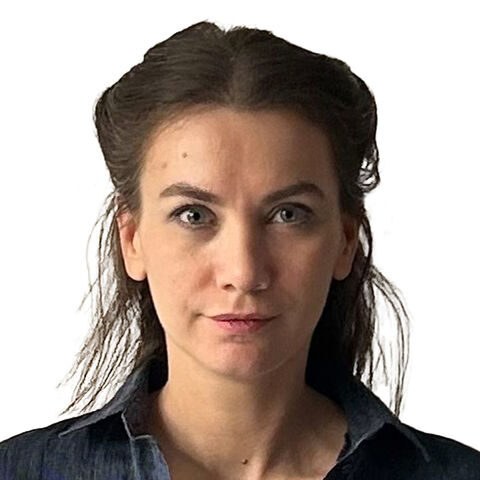
US Department of State's senior advisor to the President for Arab and African Affairs Massad Fares Boulos attends a conference for the support of peace and prosperity in the Great Lakes region, in Paris, on October 30, 2025. The international community gathered in Paris on October 30, 2025 to raise awareness about the dire humanitarian situation in the Great Lakes region, aiming to raise hundreds of millions of euros despite a drastic decrease in international aid, particularly from the United States. (Phot
US Department of State's senior advisor to the President for Arab and African Affairs Massad Fares Boulos attends a conference for the support of peace and prosperity in the Great Lakes region, in Paris, on October 30, 2025. — ALAIN JOCARD/POOL/AFP via Getty Images

You're reading an excerpt from Al-Monitor Washington, where we break down the latest in US-Middle East diplomacy. To read the full newsletter, sign up here.  

NEW YORK — As Libya struggles to emerge from years of civil war and political paralysis, President Donald Trump’s point person for Africa is dismissing criticism that an American plan to unify the country would entrench the unelected rule of two rival families. 

“We've seen this wrong and inaccurate characterization of the truth,” the Trump administration’s senior adviser for Africa, Massad Boulos, said in an interview with Al-Monitor on the sidelines of the UN General Assembly summit in New York on Thursday. 

However, Boulos declined to confirm details of the widely reported US-led initiative aimed at unifying Libya’s two governments ahead of eventual elections.  

“It's not a question of power-sharing,” said the Lebanese-American businessman and father-in-law to President Donald Trump’s daughter Tiffany. “The idea here in this unification process is to include everybody, especially in the West, which is quite diverse.” 

Boulos emphasized that message in meetings this week in New York with Libyan officials, including Mohamed al-Menfi, head of Libya’s three-member Presidency Council, and Taher al-Baour, the acting foreign minister of the Tripoli-based government. 

Two rival camps 

Libya descended into chaos with the NATO-backed uprising that overthrew and killed longtime dictator Moammar Gadhafi in 2011. The oil-rich country plunged into a civil war several years later, which ended in a UN-brokered ceasefire between the warring sides in October 2020. 

Today, Libya remains divided between the UN-recognized Government of National Unity in Tripoli, led by Prime Minister Abdul Hamid Dbeibah, and an eastern administration aligned with warlord Khalifa Hifter’s Libyan National Army.

The Trump administration has described its unification plan only in broad terms, with Boulos saying its aim is "unified institutions in Libya" to prepare for parliamentary and presidential elections. 

Reports this summer in the Financial Times, Reuters and other outlets said the US plan to reunify Libya would keep Dbeibah on as prime minister, while Hifter’s son and heir apparent, Saddam Hifter, would replace Menfi on the executive presidency council. Speaking to Al-Monitor on condition of anonymity, a Libyan official briefed on the Boulos framework confirmed Dbeibah and Hifter’s proposed involvement.   

Both men are deeply divisive figures in Libya. Despite calls for his resignation, Dbeibah — a businessman with ties to Gaddafi’s former regime — has remained in office and insists he will only cede power to an elected government. A UN inquiry alleged that his supporters offered bribes to secure his 2021 selection as interim prime minister.

Earlier this year, a UN panel of experts found that a private oil company indirectly controlled by Saddam Hifter diverted over $3 billion in oil revenue to bank accounts abroad. Hifter also took part in his aging father’s 2019-2020 offensive on Tripoli, which deepened Libya’s civil war, and forces under the Hifters' command have been accused of war crimes and other serious human rights abuses.

“It's not about families or names,” Boulos said when asked about the reported Hifter-Dbeibah deal, before adding, “At the end of the day, those are individuals that have to be in one position or the other.”

Boulos said the country’s institutions will be filled with “individuals representing all Libyans, including the existing leaders and officials, which are part of this understanding.”

For the Trump administration, a unified and stable Libya serves several US interests. Renewed conflict could complicate counterterrorism efforts, send new migration flows into Europe and expand Russia’s sphere of influence in Africa and the Mediterranean. 

The country also offers potential investment opportunities for US energy companies, as it’s home to Africa’s largest proven oil reserves. Both ConocoPhillips and Chevron inked deals with Libya's state-owned National Oil Corporation in 2026. 

Stalled elections 

The United Nations has repeatedly sought to organize long-delayed nationwide elections in Libya, but polls scheduled for late 2021 were called off at the last minute amid disputes over who was eligible to run. Analysts say there is little incentive for Libya’s political elites to hold elections they have benefited from delaying. 

Last month, the rival Libyan blocs signed a UN-brokered agreement in Tripoli that sets a two-year timeline for elections under a single executive authority. The agreement followed talks that brought together representatives from each of Libya’s four main institutions: the Government of National Unity, the High Council of State, the House of Representatives and the Libyan National Army.

"Within those two years, the US initiative with Turkey and Egypt and others is to unify institutions," said Boulos, who described his plan as “complementary” to the United Nations' work in Libya. 

The effort dates back to September 2025, when Boulos held talks in Rome with Saddam Hifter and Ibrahim Dbeibah, an adviser and nephew of the prime minister. The younger Hifter also met with Boulos and Secretary of State Marco Rubio in Washington in July. 

The administration says its work to unite Libya's rival factions is gaining ground, citing the eastern and western governments’ April agreement on Libya’s first unified national budget in more than a decade and participation that same month in a military exercise led by US Africa Command.

But the US initiative has also drawn resistance, particularly in western Libya. In Dbeibah’s hometown of Misrata, community leaders reportedly told Boulos when he visited in July that they would reject any deal installing figures implicated in corruption or human rights abuses. The Tripoli-based Libyan High Council of State rejected the US plan in an April vote, saying any settlement must follow the United Nations' 2015 framework for Libya’s political transition

Asked how he could assure Libyans that the country's dominant political families would not become further entrenched by his initiative, Boulos replied, “This isn’t about families.” 

An AL-MONITOR subscriber gifted you this article. Gifted by an AL-MONITOR subscriber.

A gift worth sharing.

This one's on us. Subscribe for unlimited access to everything we publish, plus gift articles for your inner circle. As low as $2/week. This one's on us. Get unlimited access, plus gift articles for your inner circle, from $2 a week.

See Offers

Related Topics